
Frontier AI & Capital Allocation: Multi-Year Venture Funding & Valuation Dynamics
Analyzing seed-to-growth capital flows across AI infrastructure, vector databases, coding copilot agents, and specialized silicon.

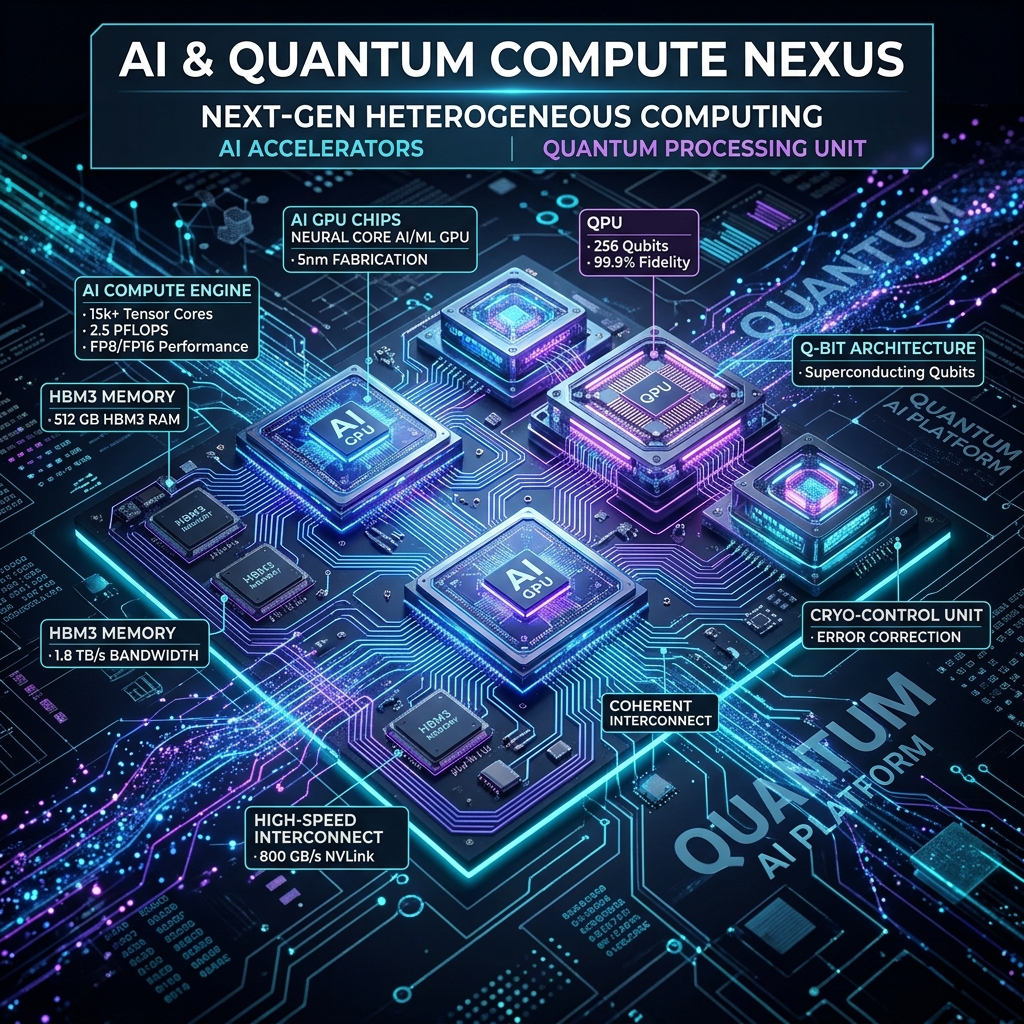
Macro Capital Flows in AI & Startup Ecosystems
Venture capital allocation in artificial intelligence has matured from speculative early-stage bets to rigorous unit-economic evaluations. Institutional investors are demanding clear unit-economic discipline, customer retention metrics, and inference cost control before committing Series A and Series B growth capital.
As foundational model performance stabilizes across major tech providers, the venture community is evaluating startups based on gross margins, workflow integration depth, and defensive data network effects rather than raw model benchmark claims.
Infrastructure vs. Application Layer Capital Allocation
Capital allocation across global tech hubs (Silicon Valley, Europe, and Asia) is divided into two primary categories:
1. Compute & Infrastructure Layer (High Capital Intensity)
Startups developing energy-efficient AI chips, liquid-cooled datacenter architectures, low-latency vector indexers, and token optimization middleware continue to raise massive growth rounds. Investors recognize that underlying infrastructure providers capture reliable revenue regardless of which application-layer products succeed.
2. Vertical Domain Agents (High Unit Margin)
Vertical AI agents targeting specialized professional domains—such as legal contract analysis, clinical trial documentation, code refactoring, and financial compliance—are capturing strong enterprise traction. These startups differentiate through proprietary domain data integrations and deterministic workflow execution.
Valuation Multiples & Inference Margin Realities
A key evolution in 2026 startup financing is the strict scrutiny of inference margin economics. In earlier funding cycles, AI startups frequently reported high top-line ARR while incurring hidden 50%+ gross margin penalties due to unoptimized LLM API calls.
Top-tier institutional investors now require founders to demonstrate:
Corporate Venture Capital & Strategic Co-Investments
Corporate Venture Capital (CVC) arms from major cloud providers, semiconductor fabricators, and enterprise software giants account for over 45% of total growth-stage capital. Beyond providing equity financing, strategic investors bundle cloud GPU credits, enterprise distribution channels, and co-selling agreements into financing packages.
Empirical Data from the SPIDITS Startup Funding Registry
By tracking real-time funding transactions across seed incubators (including Y Combinator cohorts) and growth equity rounds, the SPIDITS Funding Registry highlights key capital trends:
Strategic Forecast for Founders & Institutional Investors
Inside GPT-5.6-Cyber: OpenAI’s Dedicated Defensive Frontier Model and the Daybreak Expansion
OpenAI has expanded Daybreak, introducing Daybreak Blue and Daybreak Red alongside GPT-5.6-Cyber—a specialized model achieving a 95.0% completion rate on advanced cybersecurity completion benchmarks. Here is the full technical analysis.
Inside Gemini 3.6 Flash: Google's Token-Efficient Workhorse for Scaling Agentic AI
Google has released Gemini 3.6 Flash, reducing output token consumption by 17% globally and up to 65% on DeepSWE while slashing inference costs. Here is the full breakdown for AI architects and tech leaders.
Explore technical definitions, architecture diagrams, and chronological market timelines referenced in this article:
Get top 5 high-signal AI news, venture funding rounds, and research papers auto-routed to dedicated channels every 3 hours.