
The 2026 Compute Shift: Why Token Efficiency is Overtaking Raw Parameter Count
Inside the economic and architectural forces driving AI labs to focus on inference throughput, model pruning, and agentic step optimization.

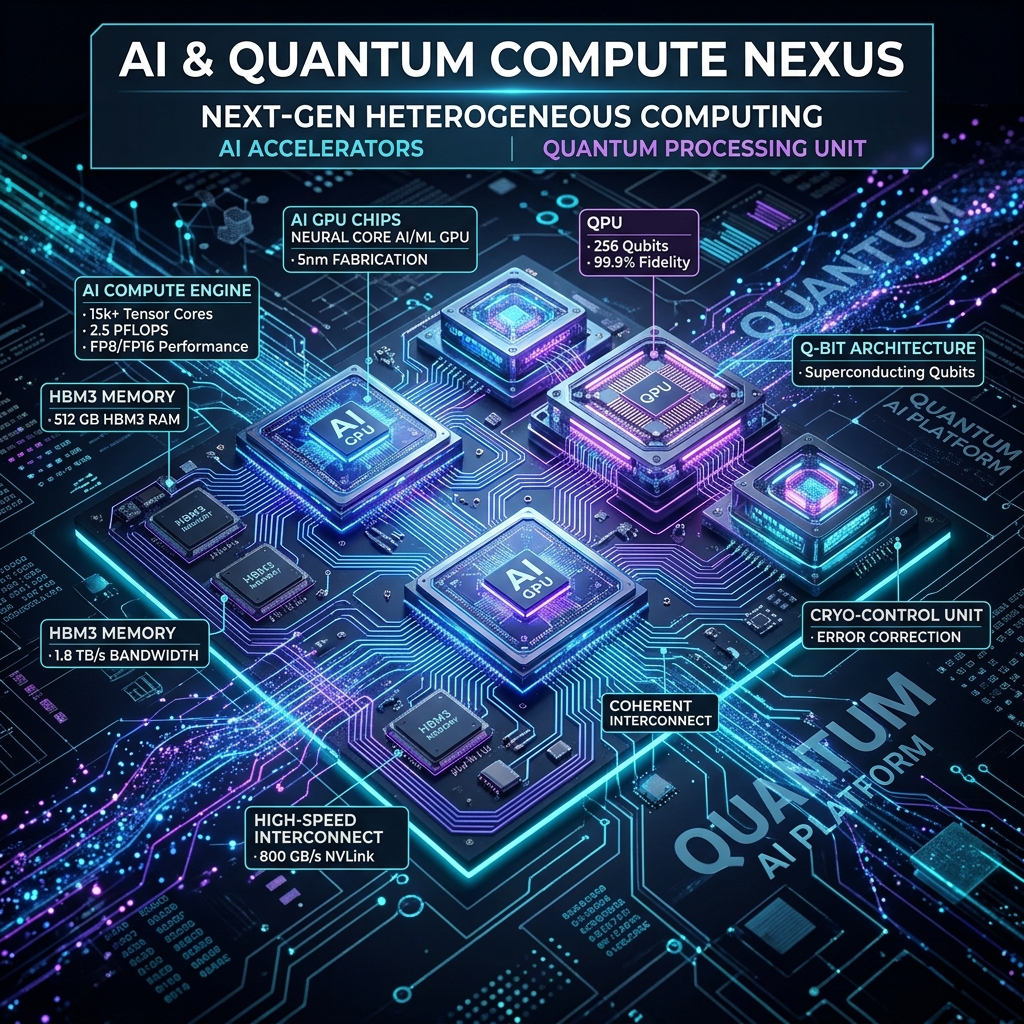
Executive Summary: The End of Dumb Scale
For years, the artificial intelligence industry operated under a single dominant paradigm: larger parameter counts automatically yield superior model performance. However, in 2026, the economics of production AI deployment have forced a structural pivot away from brute-force parameter expansion toward inference token efficiency, step optimization, and per-watt throughput.
When scaling an AI feature from an initial prototype to millions of active daily requests, model size becomes a direct liability if the underlying LLM generates verbose, unconstrained outputs. High output token counts compound API invoices, degrade execution latency, and overwhelm downstream subagent context windows.
The Economics of Production Inference: TCO & Serverless GPU Budgets
In production application architectures, inference costs account for over 80% of total lifetime model expenditure, drastically eclipsing pre-training investment. Every additional 100 tokens of internal chain-of-thought preamble generated by a multi-step agent adds latency overhead and serverless GPU billing.
Key economic drivers accelerating token-efficiency engineering include:
Architectural Patterns for 2026 Token Efficiency
Leading AI engineering teams are adopting three core design patterns to optimize token consumption without sacrificing output quality:
1. Speculative Decoding & Draft Model Routing
Pairing a high-speed draft model (such as Gemini 3.5 Flash-Lite or Claude Flash) with a high-capacity target model (Gemini 3.6 Flash) allows rapid token generation followed by batch verification. Draft models predict candidate token sequences, which the target model verifies in a single parallel forward pass.
2. KV Cache Compression & Context Pruning
Rather than re-ingesting full conversation histories on every agent iteration, modern frameworks compress Key-Value (KV) caches. Non-essential context, redundant tool call logs, and stale system prompts are pruned using semantic relevance scoring.
3. Step-Constrained System Prompts & Structured Outputs
By instructing models to output concise JSON payloads instead of verbose conversational responses, engineering teams reduce token volume by 40–60%. System prompts explicitly prohibit polite preambles and conversational filler.
Production Migration Checklist for Infrastructure Leaders
To transition legacy AI pipelines to token-efficient architectures, engineering leaders should enforce the following checklist:
Inside GPT-5.6-Cyber: OpenAI’s Dedicated Defensive Frontier Model and the Daybreak Expansion
OpenAI has expanded Daybreak, introducing Daybreak Blue and Daybreak Red alongside GPT-5.6-Cyber—a specialized model achieving a 95.0% completion rate on advanced cybersecurity completion benchmarks. Here is the full technical analysis.
Inside Gemini 3.6 Flash: Google's Token-Efficient Workhorse for Scaling Agentic AI
Google has released Gemini 3.6 Flash, reducing output token consumption by 17% globally and up to 65% on DeepSWE while slashing inference costs. Here is the full breakdown for AI architects and tech leaders.
Explore technical definitions, architecture diagrams, and chronological market timelines referenced in this article:
Get top 5 high-signal AI news, venture funding rounds, and research papers auto-routed to dedicated channels every 3 hours.