
Scaling Cloud Migrations with Agentic AI on Amazon Bedrock AgentCore
AI Executive Summary
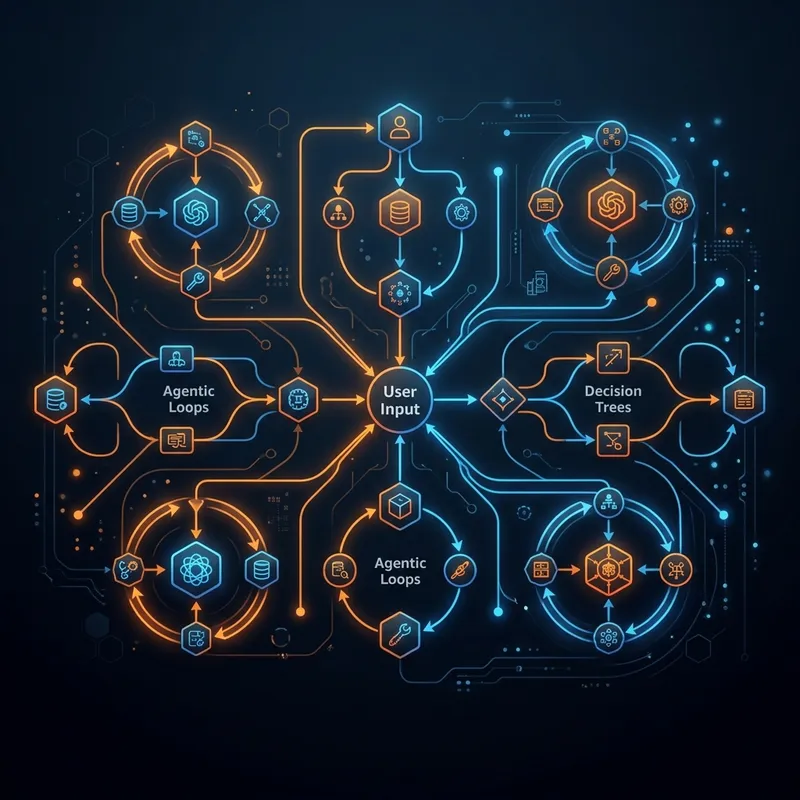
AWS Professional Services has deployed a multi-agent orchestration framework built on Amazon Bedrock AgentCore and the Strands Agents SDK to automate enterprise cloud migrations.
By leveraging Model Context Protocol (MCP) server patterns, the system targets manual intake, redundant infrastructure development, and reactive post-migration operations.
Across a portfolio of over 300 applications, this framework successfully reduced Infrastructure as Code (IaC) development times from 3-4 weeks per application to just minutes.
Why It Matters
Strategic TakeawayThis architecture demonstrates the viability of multi-agent system and standardized protocols like MCP to replace manual, multi-week software engineering workflows with automated, deterministic code generation at enterprise scale. It shifts cloud migration from a labor-intensive professional services model to an automated, platform-driven execution paradigm.
Multi-Vector Implications
- TECHNICALStandardizing on MCP server patterns allows agents to dynamically interface with diverse IaC tools and legacy discovery APIs, eliminating custom integration glue code.
- MARKETTraditional IT consulting firms face severe margin pressure as agentic frameworks compress multi-week migration engineering timelines into minutes.
- GOVERNANCEAutomated IaC generation requires real-time, policy-as-code guardrails to prevent agents from deploying non-compliant or insecure cloud architectures.
Strategic Outlook
12-18M HorizonOver the next 12-18 months, expect AWS to deeply integrate Bedrock AgentCore and MCP-based agent patterns into its standard migration methodologies, forcing competitors like Azure and GCP to release equivalent out-of-the-box agentic migration toolkits.
Referenced Coverage & Sources
Read the full coverage below for original reporting, technical benchmarks, and complete primary source details.
Add Secure Web Search to Claude Desktop with Amazon Bedrock AgentCore
Claude Desktop on Amazon Bedrock is limited to the model's knowledge cutoff without web search.
Scaling MoE Reinforcement Learning on Amazon EKS with EFA and DeepEP with 40% More Throughput
Learn how to scale Mixture-of-Experts (MoE) reinforcement learning on Amazon EKS using Elastic Fabric Adapter (EFA) and DeepEP.
Build a Multi-agent Music Production Pipeline on Amazon Bedrock AgentCore Runtime Instances
Amazon Bedrock AgentCore Runtime Instances gives multi-agent workflows AWS managed EC2 infrastructure with GPUs, persistent volumes, and multi-day sessions.
Fine-tune a Search Agent with Multi-turn RL on Amazon SageMaker AI
Fine-tuning teaches a small search agent your tools and environment, giving it the reliability of a frontier model at lower latency and cost.
Agent Framework
An Agent Framework is a standardized software architecture (such as Microsoft AutoGen, CrewAI, LangChain, or LlamaIndex Workflows) designed to orchestrate autonomous AI agents. It provides reusable primitives for tool execution, persistent memory, multi-agent communication, and state management.
Agentic AI
Agentic AI refers to artificial intelligence systems designed to act autonomously, make decisions, plan workflows, and execute tasks without constant human intervention. Unlike traditional models that only respond to queries, agentic systems use an agentic loop to perceive environments, reason over goals, use tools, and iterate to achieve outcomes.
Explore technical glossaries, weekly market briefings, and editorial research articles related to this story:
Get top 5 high-signal AI news, venture funding rounds, and research papers auto-routed to dedicated channels every 3 hours.