
Improving HCLS AI Reasoning with Open-source Agent Skills
AI Executive Summary
The AWS ML Blog team released a collection of 38 open‑source HCLS agent skills (SKILL.md markdown files) that encode decision frameworks such as ACMG/AMP variant classification and pipeline commands for tools like GATK4.
Evaluation shows agents equipped with these skills beat identical agents without them in 70‑86% of head‑to‑head tests, with the strongest gains in critical‑thinking tasks (78‑85% win rate, d = 0.65‑1.03).
The skills are organized under an open standard, cover 11 HCLS domains, and are published under the MIT‑0 license.
Why It Matters
Strategic TakeawayEmbedding structured, domain‑specific reasoning into foundation‑model agents directly addresses silent mis‑applications of clinical guidelines, turning superficially correct outputs into verifiably accurate decisions.
Multi-Vector Implications
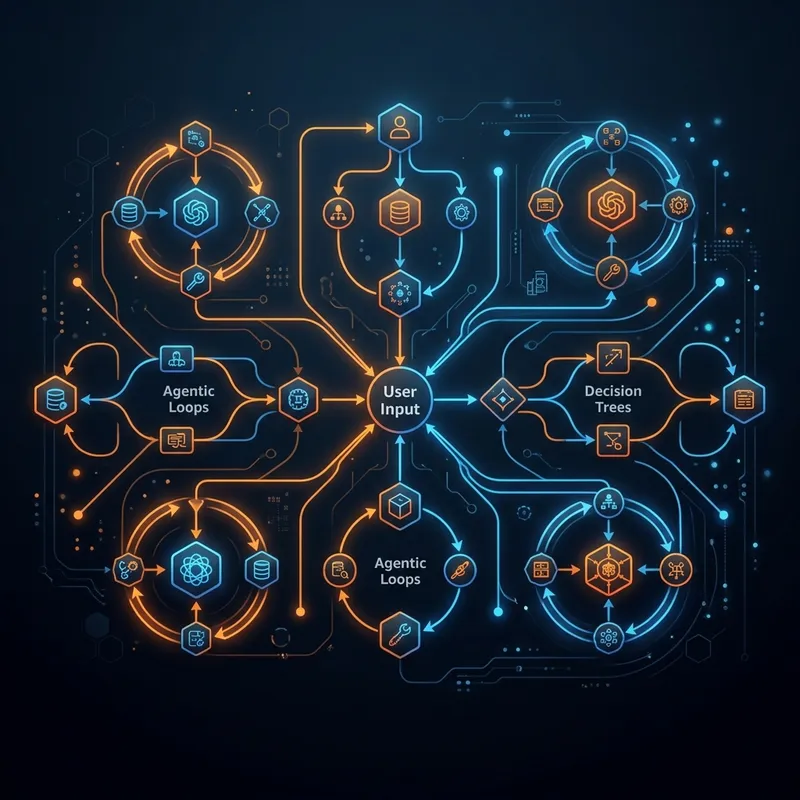
- TECHNICALAgents can ingest markdown‑encoded decision tree at inference, enforcing evidence thresholds and parameter limits that were previously omitted.
- MARKETVendors that integrate the skill library can claim higher diagnostic accuracy, gaining a competitive edge in HCLS AI services.
- GOVERNANCERegulators gain a clearer audit trail as agents reference explicit, standardized frameworks, easing compliance verification.
Strategic Outlook
12-18M HorizonOver the next 12‑18 months the skill catalog will likely become a de‑facto standard, prompting broader adoption across commercial LLM APIs, expansion of community‑contributed skills, and tighter integration with regulatory validation pipelines.
Referenced Coverage & Sources
Read the full coverage below for original reporting, technical benchmarks, and complete primary source details.
Deploy Hugging Face Models on Amazon SageMaker AI with Coding Agents
Deploy production-ready Hugging Face models on Amazon SageMaker AI using six open-source agent skills.
Together AI Expands Fine-tuning Service with More Models, Live Metrics, and Finer Controls
Together Fine-Tuning adds the latest open-weight models, live experiment tracking, Expert LoRA, early stopping, tokenized dataset previews, pre-flight validation, and lower training prices on selected models.
Patch the Planet: a Daybreak Initiative to Support Open Source Maintainers
OpenAI introduces Patch the Planet, a Daybreak initiative helping open-source maintainers find, validate, and fix vulnerabilities with AI and expert review.
SpaceXAI Releases Flagship Grok 4.6 Model with Advanced Reasoning Capabilities
SpaceXAI today released Grok 4.6, a large language model that it says can outperform Anthropic PBC's Claude Fable 5 in some areas. The company was known as xAI until last month. The Elon Musk-founded artificial intelligence provider rebranded in connection with its acquisition by SpaceX Corp.
AI Agent
An AI Agent is an autonomous entity that perceives its environment through sensors (or inputs) and acts upon that environment using actuators (or tools) to achieve specific goals. An agent relies on a reasoning brain (typically an LLM) to plan and execute multi-step processes.
Foundation Model
A Foundation Model is a large-scale AI model trained on massive, broad datasets (typically through self-supervised learning) that serves as the baseline starting point for multiple downstream tasks. Examples include GPT-4, LLaMA, and stable diffusion models.
NDA
An NDA (Non-Disclosure Agreement) is a legally binding contract that restricts parties from sharing confidential information disclosed during discussions.
Explore technical glossaries, weekly market briefings, and editorial research articles related to this story:
Get top 5 high-signal AI news, venture funding rounds, and research papers auto-routed to dedicated channels every 3 hours.