
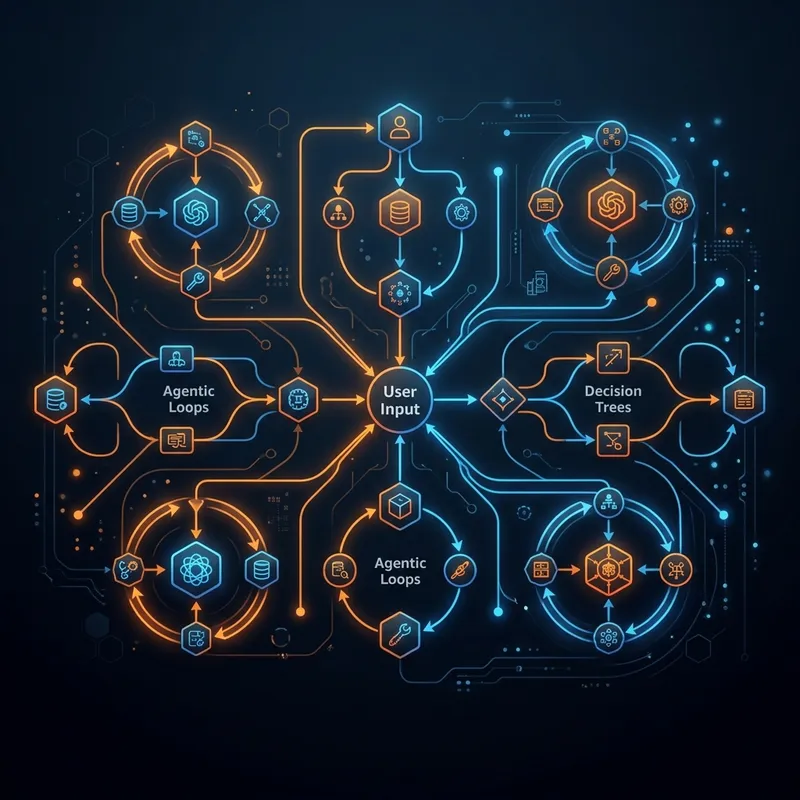
AWS Vector Solutions: Build Agentic AI Where Your Data Lives
AI Executive Summary
AWS is integrating vector search capabilities directly into its existing database and storage portfolio, offering a decision model across six purpose-built solutions to eliminate the need for standalone vector database.
By keeping vectors alongside source data, this architecture removes cross-service hops, reduces latency, and bypasses complex data synchronization pipelines.
This approach allows enterprises to build agentic AI retrieval layers directly where their structured and unstructured data already resides.
Why It Matters
Strategic TakeawayEmbedding vector search natively within established database engines challenges the market viability of specialized, standalone vector database by eliminating the operational overhead of external data synchronization. This architectural consolidation significantly reduces retrieval latency and security boundaries for multi-step agentic AI workflows.
Multi-Vector Implications
- TECHNICALNative vector indexing within existing AWS databases eliminates ETL pipelines and cross-service network hops, drastically reducing query latency for real-time agentic retrieval.
- MARKETStandalone vector database vendors face intense pricing and adoption pressure as cloud hyperscalers commoditize vector search by bundling it into legacy database engines.
- GOVERNANCEStoring vectors alongside source data simplifies compliance by maintaining existing database access controls, encryption standards, and data residency boundaries.
Strategic Outlook
12-18M HorizonOver the next 12-18 months, expect AWS to deeply integrate these six purpose-built vector solutions with Bedrock's agentic orchestration frameworks, driving enterprises to favor in-place database upgrades over specialized vector database migrations. This will accelerate the commoditization of vector search, forcing standalone vector database startups to pivot toward specialized hybrid search or real-time streaming analytics.
Referenced Coverage & Sources
Read the full coverage below for original reporting, technical benchmarks, and complete primary source details.
New Agent Skill: Amazon SageMaker Optimized Generative AI Inference for Your Coding Agent
Amazon SageMaker optimized generative AI inference introduces the aws-ai-ml skill through the Agent Toolkit for AWS, giving coding agents like Kiro, Claude.
Open and Emergent Problems in Agentic Privacy and Security: a Contextual Angle
Education Innovation.
NVIDIA DGX Spark 64GB Gives Developers More Ways to Build and Scale Local AI
Local AI is becoming more useful by the token.
From Training to Production, NVIDIA and CoreWeave Close the Loop on Agentic AI
Building on nearly a decade of co-engineering, CoreWeave has built NVIDIA compute, networking and software into a cloud purpose-built for AI that's still.
Agentic AI
Agentic AI refers to artificial intelligence systems designed to act autonomously, make decisions, plan workflows, and execute tasks without constant human intervention. Unlike traditional models that only respond to queries, agentic systems use an agentic loop to perceive environments, reason over goals, use tools, and iterate to achieve outcomes.
RAG
Retrieval-Augmented Generation (RAG) is a methodology that optimizes the output of a Large Language Model (LLM) by referencing an authoritative, external knowledge base or Vector Database before generating a response. RAG helps models access real-time information and drastically reduces hallucination.
Vector Database
A Vector Database is a specialized storage engine designed to store, index, and query high-dimensional vector embeddings efficiently. It enables fast semantic search and similarity matching using algorithms like HNSW or IVF.
Explore technical glossaries, weekly market briefings, and editorial research articles related to this story:
Get top 5 high-signal AI news, venture funding rounds, and research papers auto-routed to dedicated channels every 3 hours.